Grants-First AI | by Zenius
One Grant, Start to Finish
Grants-First AI: a design preview. The reasoning agents described here are in development.
Meet the foundation
The Lakeshore Community Foundation is fictional. Its grants operation is typical of a mid-sized community foundation.
$18M
granted each year across 140 active grants
4
staff on the grants team
Fluxx
as the system of record, with spreadsheets alongside
2 audits
each year, plus a quarterly board docket
Youth Workforce Pathways is a two-year, $250,000 award to a community nonprofit under the foundation’s economic mobility strategy. It requires quarterly reports, a mid-term site visit, and a final evaluation.
1Strategy and fit
The program officer is preparing the next docket. The foundation received 42 applications under the economic mobility strategy and has two weeks to review them.
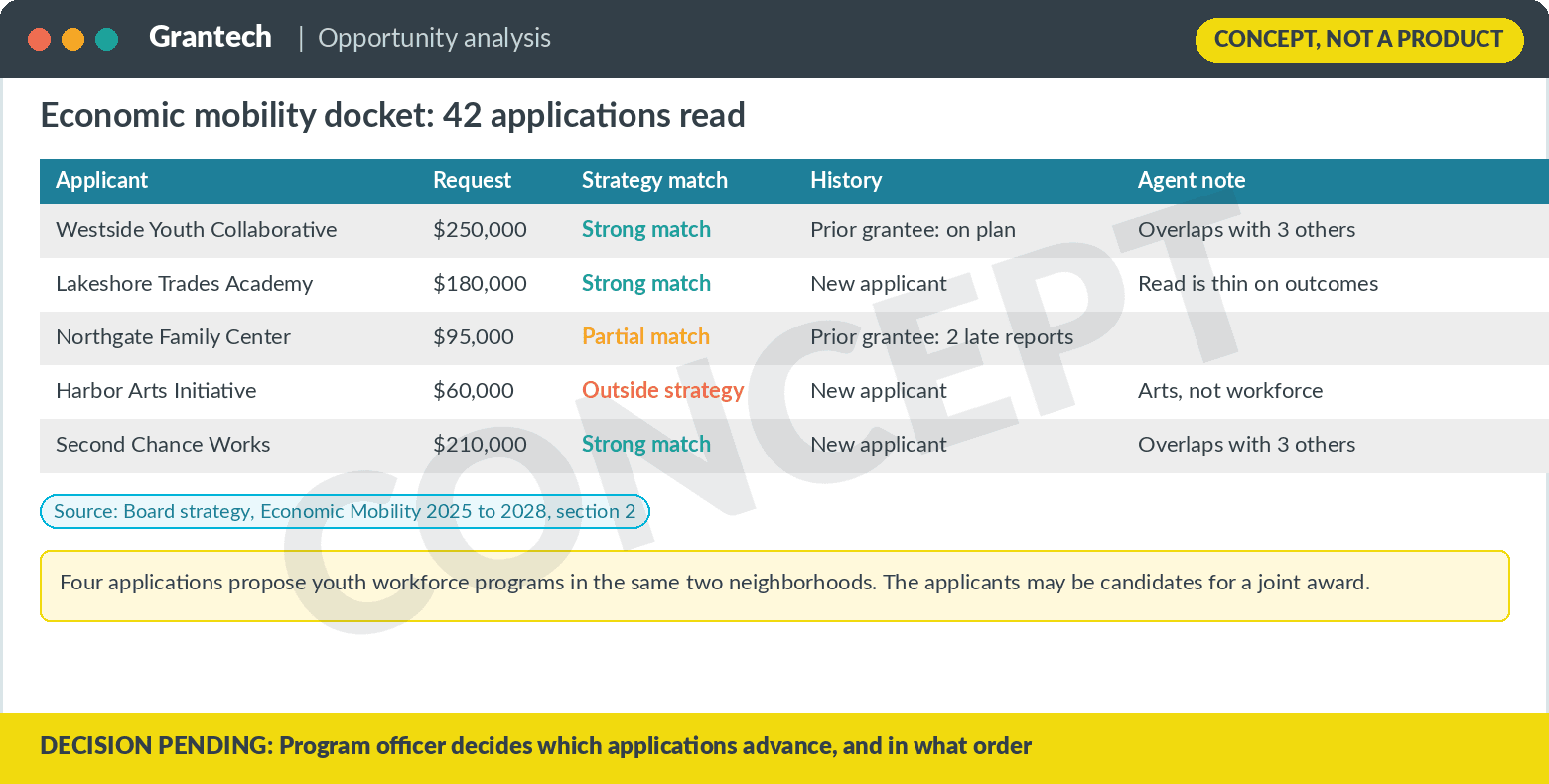
Zenius agent: Opportunity analysis
- A one-page summary of each application, with the relevant strategy language quoted.
- Prior grantees among the applicants, and how their earlier reports compared with plan.
- Four applications that propose similar work in the same two neighborhoods.
Foundation staff decide
- Which applications advance to full review, and in what order.
- Whether to introduce the four overlapping applicants to one another.
The agent summarizes and sorts applications. It does not score applicants on merit or recommend which to fund.
2Application review
Youth Workforce Pathways is in full review. The budget has 31 line items. Foundation policy caps indirect costs and prohibits certain expenses.
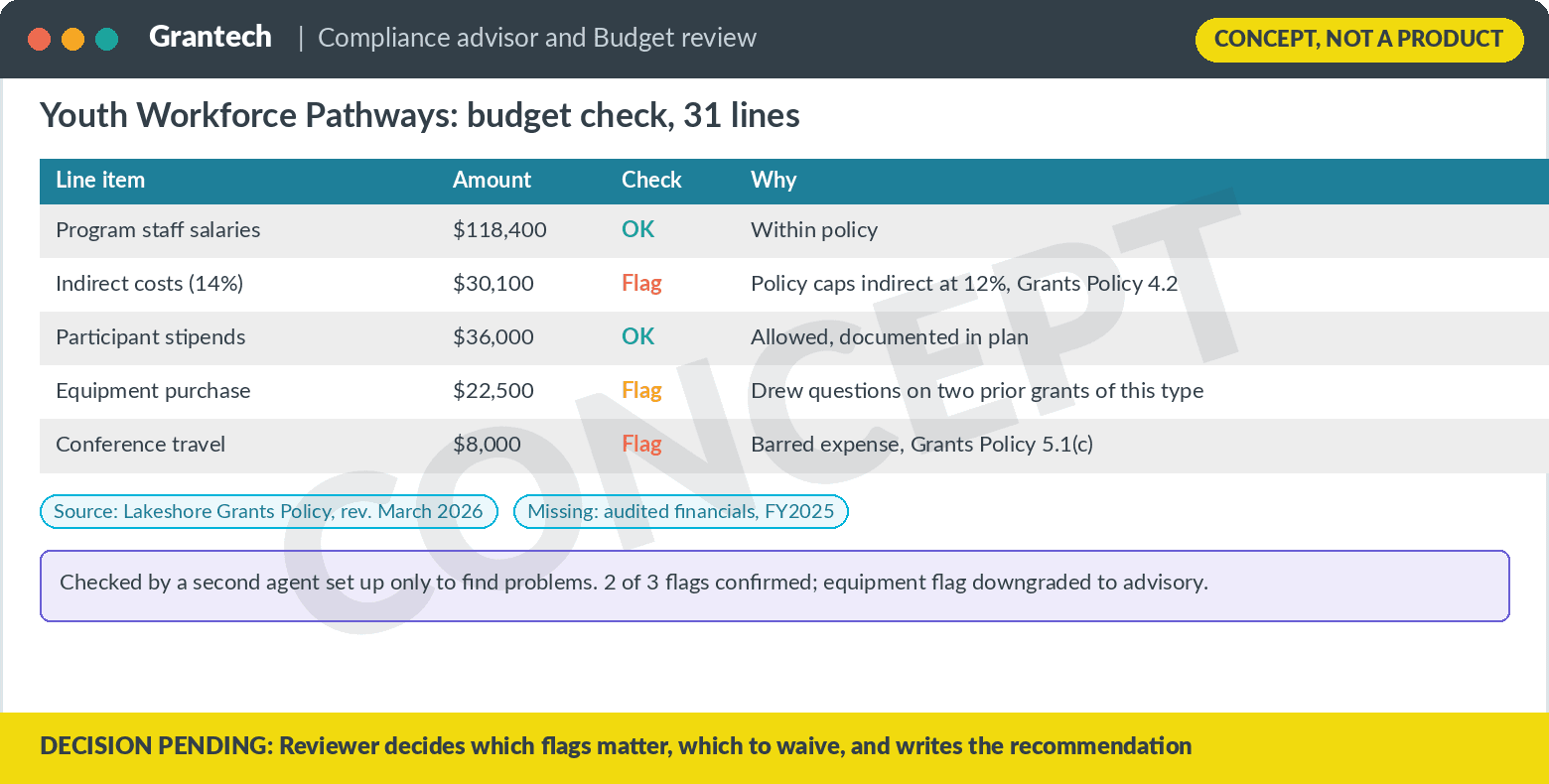
Zenius agent: Compliance advisor and Budget review
- A check of each budget line against foundation policy, with the policy section cited.
- Budget items that drew questions on prior grants of the same type.
- A review of the result by a second agent configured to find errors, before the reviewer sees it.
Foundation staff decide
- Which flags to act on and which to waive, with a note on the record.
- The review recommendation, which the reviewer writes and signs.
The agent does not determine eligibility. Each flag is a prompt for the reviewer and includes its source.
3Award and docket
The grant is going to the board. The docket requires a memo, a final budget, and grant conditions the program officer can support.
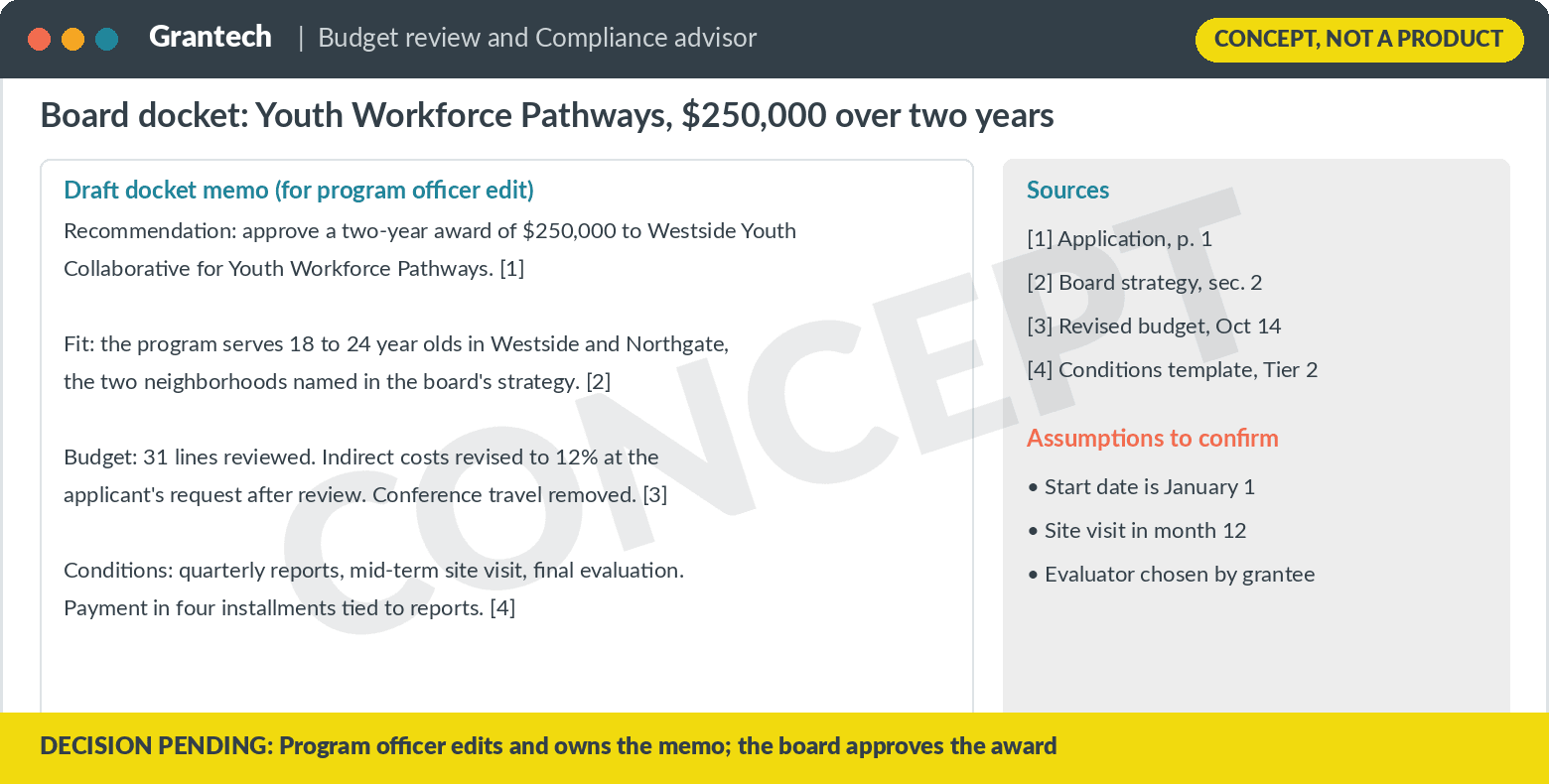
Zenius agent: Budget and Compliance
- A draft docket memo in which each statement cites its source.
- Grant conditions drawn from the foundation's templates, with unusual conditions marked.
- A list of each assumption the agent made.
Foundation staff decide
- The content of the memo, which the program officer edits and approves.
- The award, which the board approves and the foundation's officers sign.
No agent approves an award.
4Monitoring and reporting
In month nine, the grantee’s second quarterly report is late. The team tracks reporting deadlines for 140 grants in one spreadsheet.
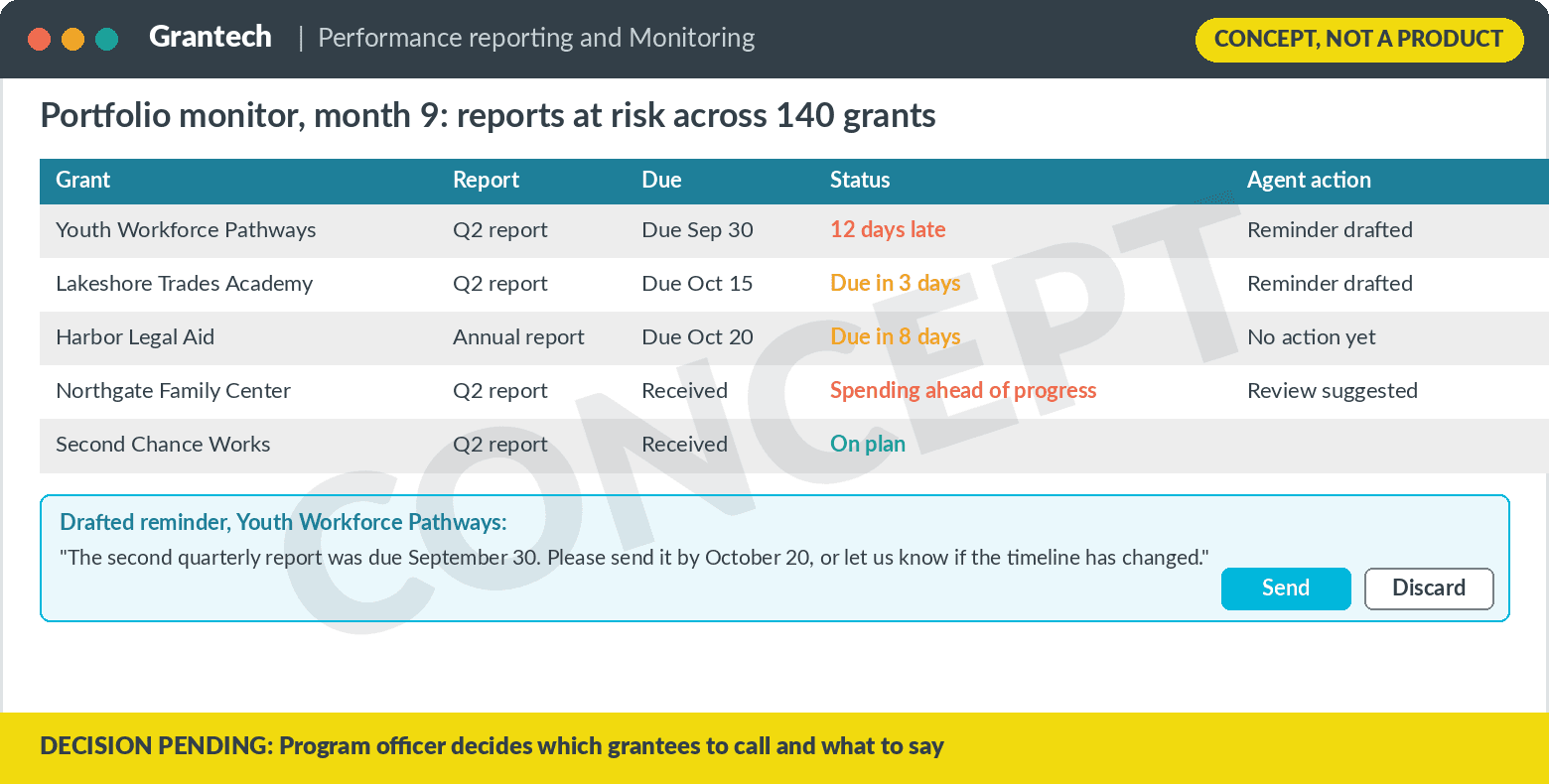
Zenius agent: Reporting and Monitoring
- Reports at risk across all 140 grants, ranked by due date, each with a drafted reminder.
- Each submitted report compared with the grantee's plan and budget.
- Grants where spending and reported progress differ.
Foundation staff decide
- Which grantees to contact, and the content of each message.
- Whether a difference is a concern or a normal adjustment.
The agent reviews every report. Staff review the reports that need attention.
5Audit and closeout
At the end of year two, the auditors request the decision record for a sample of grants. Youth Workforce Pathways is in the sample.
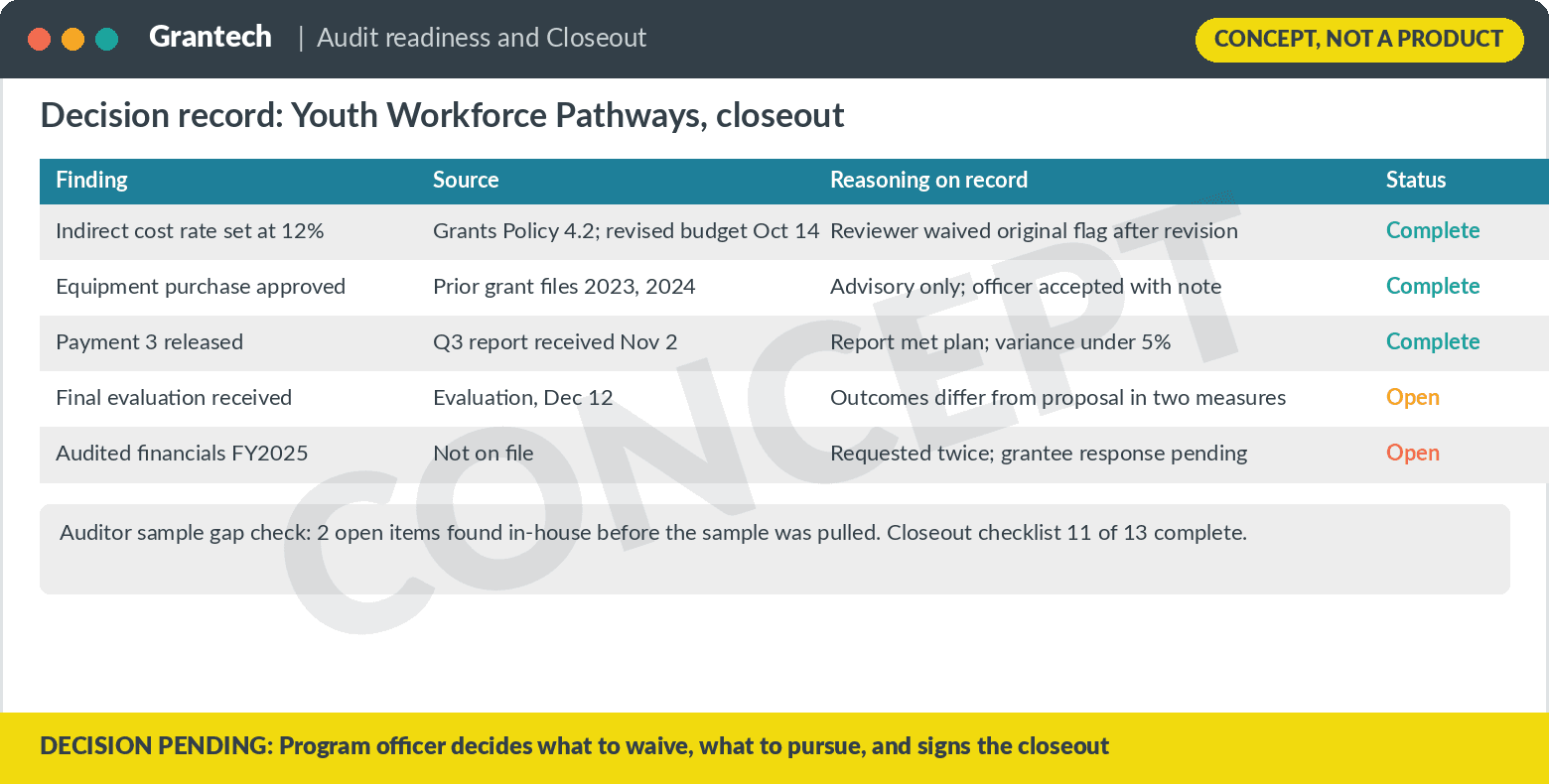
Zenius agent: Audit and Closeout
- For each finding in the file, the source and the reasoning, as recorded at the time.
- A closeout checklist against foundation policy, each item marked complete, open, or waived, and by whom.
- Open items in the auditor's sample, identified before the sample is reviewed.
Foundation staff decide
- What to waive, what to follow up, and what to report to the auditor.
- The closeout, which the program officer signs.
The record shows the source and reasoning for each decision at the time it was made.
What is real today, and what is next
Running today
- The governed platform: one gateway, cost attribution, and a full audit record.
- Command Center, the leadership cockpit for AI spend, policy, and audit.
- GMMI and the free Snapshot.
- Grants Managed Services, including audit support, in delivery at a federal grant-making agency, where every AI output is reviewed and accepted by a named person before use.
In development
- The Grantech reasoning agents, in the order the build plan sets.
- The shared grants knowledge base they work from.
- A layer above existing grants systems that replaces none of them.